Build a design center and unfreeze the flagship
Head of Design · 2022 — 2024
I joined Gazprom Neft in 2022 as Head of Design. Over two years I pulled ~110 scattered designers into a single maturity-level-3 function: shared processes, an open knowledge base, and design-as-a-service for the whole company.
The hardest task was the internal ESO portal for 50 thousand people, which had sat in mockups for two years. Two teams had tried to move it before me and both failed to reach agreement with the departments. I didn't break through right away either — the first 2 months hit a wall. Things moved once we changed how we framed the conversation and came in with numbers from UX research instead of an idea. The portal won CX Awards 2024 after I'd already left.
Product design center — a system, not a team
There were designers at GPN before me. What was missing was a shared process, a shared language, and places to exchange. They sat inside their departments, never crossed paths, and helping each other was awkward. In the first weeks I mapped the territory through the leads: who sits where, who reports to whom, who's working on what. The output was a table that turned out more accurate than most of the company's official documents.
Map of people. An assessment of every designer: which block they're in, what competencies, who needs support.
Matrix reporting. 10 designers reporting to me directly. 5 department design directors functionally, each with about 30 people under them. Syncs with directors once a month and more often, plus shared syncs with departments on the roadmaps of major integrations.
Shared rituals. A daily every 2 days, the lead's design review, team syncs, the competency map as the standard for the company's whole design function.
Design as a service. Open consultations and 19–20 project reviews a year. We came away with a list of things to fix, not a release veto — otherwise they'd simply stop inviting us.
Systemic entry points. An open Confluence with all the processes and Jira Sourcing as the official channel for requesting product design.
Not everything took root equally: in some teams the dailies died off after six months because the leads found their own formats. That was fine — I stopped trying to hold everyone to the same measuring stick.
Over two years it all came together into a working model — the one I get hired for on the next roles. I don't build a team in the moment, I build an environment: structure, assessment, an open community, a public voice. GPN is the most mature example of this setup: 110 people at maturity level 3, a legacy that doesn't depend on my presence.
Over two years we moved the design center from level 2 to level 3 maturity. We pulled ~110 scattered designers into a single function through 5 design directors. Strategic products (ESO, Insight, Corporate Search, Era-Drilling, N1 Hub) we ran ourselves, without contractors.
ESO — the flagship that hadn't moved for years
The internal portal through which an employee files for vacation, a business trip, any request. Before us the company had 800+ scattered services; you couldn't file a simple request without a colleague's help. The two previous design teams stalled at the mockup stage, unable to reach agreement with the departments. I spent another six months walking into the same dead end and hitting the same wall.
We only moved once we changed the language of the conversation. We stopped coming with an idea and started coming with numbers. Before-and-after measurements from the UX research gave us those numbers; on top of that we secured the CEO's sign-off in a letter, lined up allies across departments, and held about a hundred respectful meetings with service owners.
We switched the framing from "let's unify everything" to "here are the numbers, here's the payoff for your scenario." Before that, every attempt led with the idea and ran into defensiveness.
Rolled out to 60+ GPN organizations: 50,000+ users, 550+ services in the catalog. By a conservative estimate — hundreds of millions of ₽ in time savings a year. Winner of CX Awards 2024 in the "Treating staff as an internal client" category. Both the rollout and the award came after I left. The negotiations and the design were on me; the release and support were carried over the line by the team.
Consta — the first industrial company's open-source DS
I didn't create Consta — I came in as CPO to a DS that already existed. But it was the industry's first open design system from an industrial company, and my job was to bring it to production standard across GPN's products.
A team of 4. As the design system's CPO I held the priority backlog, the budget, and advocacy inside and outside the company. Aleksey Tityaev (art director reporting directly to me) ran the component side and the link with product teams. A staff developer owned releases, infrastructure, and support. A designer owned documentation and the Figma library. There was tension inside the team: I wanted to burn down the product teams' backlog faster, the developer wanted to stabilize the infrastructure. The balance didn't always hold, and some releases slipped.
We cut designers' effort by about 40% and frontend developers' by 20%. Over the year: +12,000 npm downloads, +10,000 Figma Community downloads (we hit the trending top a few times), +1,000 uses by developers, 6,000+ organic site visitors, 70 releases, dark and light themes, 35 projects documented. In parallel we built Consta Analytics for small samples of 3–4 users, where classic A/B doesn't work.
Products on Consta — Jupiter and ERA Drilling
Consta is a production DS; dozens of GPN's internal products run on it. Two telling ones here. ERA Drilling ran under Aleksey Tityaev's art direction. Jupiter was built by a team from another department that chose Consta as its standard. Different domains, different teams, one interface language.
ERA Drilling. The Economic Calculation and Analytics model of a well bore. A single product lived at once across several very different contexts: the field in outdoor conditions, the R&D center, the control center, plus a separate scenario for geologists. Aleksey Tityaev ran the adaptivity across every screen. The field conditions took particular effort: sun, gloves, vibration — half of our web habits just didn't survive out there.
Jupiter — an example of Consta spreading into neighboring departments. Corporate search and monitoring of GPN's IT infrastructure: search across the company's internal systems (BLPS, BRD, DRP, RCL, Linux), an event feed, infrastructure maps of SAP blocks. The team chose Consta as its standard on its own, with no involvement from me in the product decisions.
HR brand through community
A design function rests on people. Without an HR brand, neither hiring nor retention would have scaled for us.
I pushed on several channels at once: external talks, partnerships with universities and schools, an internal community, plus a couple of experimental plays like the access badges. Not all of them took off equally, but together they became the brand.
In the end I was building an environment, not a team. A designer with initiative could take it all the way to GitHub, and that infrastructure runs without my constant involvement.
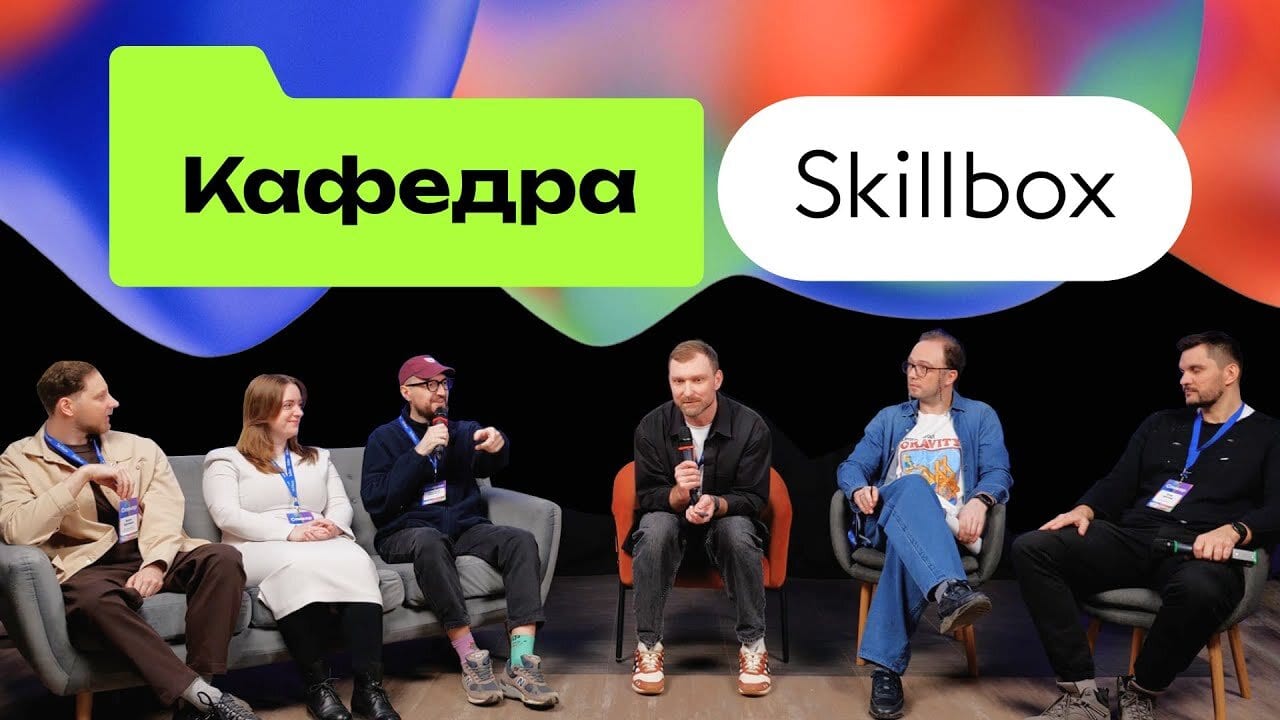
External talks. 27+ over the year at 15+ events: Stachka (~20K), Design Weekend (~40K), PromTechDesign (240K online). Topics: Consta, the design process, neural nets, digital twins.
Partnerships with universities and schools. Bang Bang Education, Young Design (a joint "Interface" category with a geomodeling module on Consta), the Stieglitz Academy. We supplied real tasks, and designers mentored students.
Internal community. 6 meetups a year for the whole company, plus open online talks together with studios (Avito, Cian, and independents). Free access for all employees, not just designers: sharing experience outward, an inflow of interesting talent inward.
Standup hackathons for interns. Over the year the team ran 36 product projects, and part of them went in a standup format: interns + designers + colleagues from other regions build a clickable prototype in 2–3 weeks. The standout was D-Outcrop, a prototype for an unmanned geological-survey service: we brought people in from Ufa and LPS and had a working prototype in 2–3 weeks. Two wins at once: a product, plus a venue where interns grew into designers on our team.
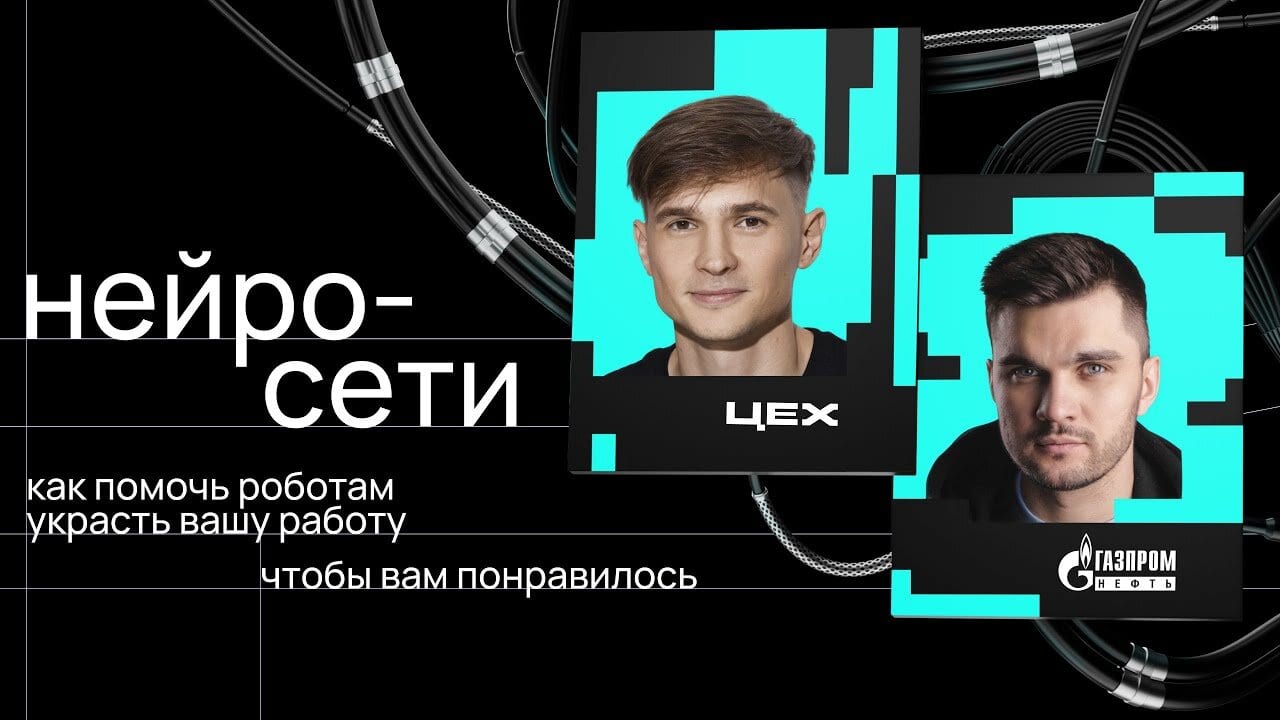
The badge story that spread on its own. The idea struck me and Vika Kudryavtseva from the team at the same moment. We teamed up and saw it through. Over 1.5 years we printed 300+ personal access badges, and each one became an entry point into the design department. After I left, Vika vibe-coded a badge generator with ChatGPT and open-sourced it — the service lives on without me.
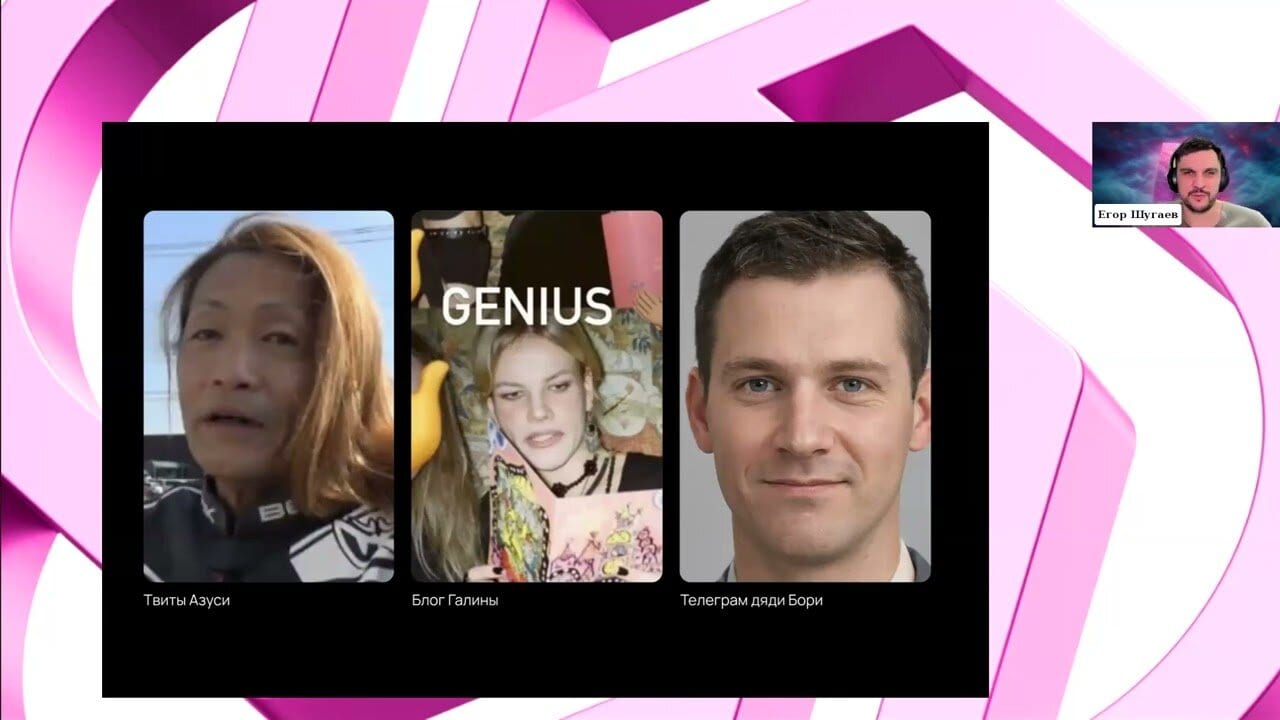
Neural nets ahead of the market
We launched a regular AI pipeline for illustration in Q1 2022 — six months to a year before generative models became a standard in design teams. Mostly concepts and communication design inside the company, plus the news feed in ESO. Most companies at that point were still just discussing ChatGPT.
We put neural nets on the level of the design process itself, not as a "wow, look, a neural net." Stable Diffusion and MidJourney slotted into that pipeline as they went public and by the end of 2022 became the main stack. Llama and ChatGPT — for text and macros. Whisper — for the UX researchers' transcriptions. Part of the team was skeptical, and some said outright that I was overrating the tools — a normal reaction for 2022.
By 2024 it had become mainstream, and we already had a worked-out process — not a zero point. After every conference, B2B companies started coming to us for consultations on AI in design.